
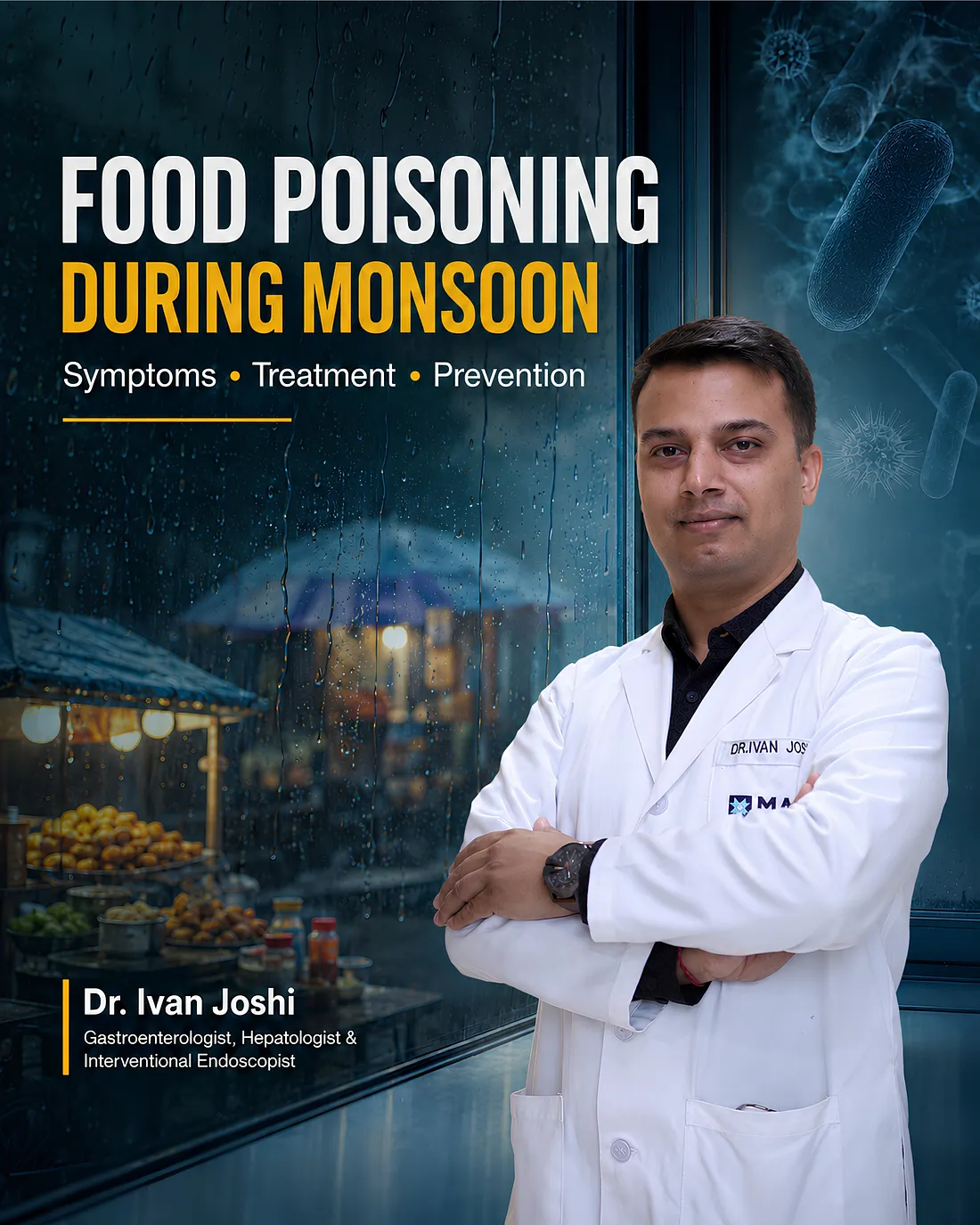
Every year, as the first monsoon showers arrive, I see the same pattern in my clinic repeat itself almost like clockwork — a steady rise in patients walking in with stomach cramps, vomiting, and loose motions. Monsoon and food poisoning go hand in hand, and there’s a very clear medical reason why. If you understand what’s actually happening in your gut during these months, you can avoid becoming one of these cases altogether.
Why Monsoon Makes Food Poisoning So Common
Food poisoning happens when you consume food or water contaminated with harmful bacteria, viruses, parasites, or the toxins they produce. Monsoon creates the perfect environment for this on almost every level. Humidity and warm, damp weather allow bacteria like Salmonella, E. coli, and Vibrio cholerae to multiply far more rapidly on food than they would in dry conditions. Waterlogging and flooding often contaminate groundwater and municipal water supplies, so even water that looks clean can carry pathogens. Vegetables and leafy greens, grown closer to flooded or waterlogged soil, pick up contamination more easily during these months. And street food — always a risk, but especially so now — sits out in humid air for longer stretches, giving bacteria more time to grow before it’s even served.
The same weather that makes monsoon so pleasant also happens to be ideal breeding conditions for the exact organisms that cause food poisoning.

Symptoms to Watch For
Food poisoning symptoms usually appear within a few hours to a couple of days after eating contaminated food, depending on the organism involved. The most common signs include:
• Nausea and vomiting, often sudden in onset
• Watery or loose stools, sometimes frequent and urgent
• Abdominal cramps or pain
• Mild fever
• Fatigue, weakness, and loss of appetite
Most cases are mild and resolve within a few days with basic home care. However, certain symptoms mean you should seek medical attention right away rather than waiting it out: blood in your stool or vomit, signs of dehydration such as reduced urination, dizziness, or a dry mouth, a high fever above 101°F, vomiting that prevents you from keeping any fluids down, or symptoms lasting more than three days without improvement. Young children, elderly people, pregnant women, and anyone with an existing chronic illness should seek medical care earlier rather than later, since dehydration progresses faster in these groups.

What Actually Helps: Treatment
• Oral Rehydration Solution (ORS): This should be your first response, not a last resort. ORS replaces the water, salts, and sugar your body loses through vomiting and diarrhoea, in the exact ratio your intestines can absorb efficiently. Sip it slowly and consistently rather than gulping it down.
• Small, frequent sips of fluids: If vomiting makes even ORS difficult, take small sips every few minutes rather than large amounts at once.
• Rest and easily digestible food: Once vomiting settles, reintroduce food gradually — bananas, rice, plain khichdi, toast, and curd are gentle on an irritated gut. Avoid dairy other than curd, oily food, and spicy food until you’re fully recovered.
• Avoid self-medicating with antibiotics: Most food poisoning is caused by toxins or self-limiting infections that resolve on their own with supportive care. Antibiotics aren’t just unnecessary in most cases — they can disrupt your gut flora further and, in some infections, actually worsen the illness. Let a doctor decide if antibiotics are genuinely needed.
• Avoid anti-diarrhoeal medication without medical advice: Stopping diarrhoea artificially can sometimes trap the infection or toxin in your system for longer, which isn’t always the right approach depending on the cause.

Prevention: What Actually Makes a Difference
Most food poisoning during monsoon is entirely preventable with a few consistent habits. These aren’t complicated, but they do need to become routine during these months rather than occasional precautions:
• Drink only boiled, filtered, or well-sealed bottled water. Avoid water from sources you’re unsure about, including ice in drinks from unreliable vendors.
• Avoid street food during monsoon, or at least be far more selective — choose vendors with visibly high turnover and hot, freshly cooked food rather than anything that’s been sitting out.
• Wash fruits and vegetables thoroughly under running water, and consider a mild vinegar or salt-water rinse for leafy greens given the higher contamination risk this season.
• Avoid raw or undercooked seafood and meat — monsoon is a particularly risky time for shellfish and fish given water contamination.
• Eat freshly cooked, hot food and avoid leftovers that have sat at room temperature for more than an hour or two, since bacteria multiply faster in humid conditions.
• Maintain hand hygiene — wash your hands with soap before eating and after using the washroom, since many monsoon infections spread through contaminated hands as much as contaminated food.
• Be cautious with home-cut fruit sold in the open, chaat, and pani puri — these are classic monsoon culprits because they involve a lot of hand contact and are often left uncovered.
A Word on Building Gut Resilience
Beyond acute prevention, keeping your gut generally healthy makes you more resilient even when you’re occasionally exposed to something questionable. A diet rich in fibre, regular meal timing, and staying generally well-hydrated all support a stronger gut lining and healthier gut flora — both of which play a role in how well your body handles an occasional contaminated meal. This doesn’t make you immune, but it does tend to mean milder symptoms and faster recovery.
The Bottom Line
Monsoon food poisoning follows a very predictable pattern every year, which is exactly why it’s so preventable. Most cases come down to contaminated water, food left out too long in humid conditions, or vegetables and street food handled without adequate hygiene. If you do fall sick, focus on rehydration first, ease back into eating gently, and don’t reach for antibiotics or anti-diarrhoeal medication without medical advice. And if symptoms are severe, persistent, or you’re seeing warning signs like blood in your stool or signs of dehydration, don’t wait it out at home — get seen. A few simple precautions this season can be the difference between an uneventful monsoon and a week lost to a stomach bug that was entirely avoidable.